The problem
Classroom and online drone training can lack practical scenario work, while many VR drone products focus narrowly on flight control.
Operational simulation
VR training for drone hazard awareness, flight planning and operational decision-making in complex environments.
Problem and solution
Many drone simulations focus on flying the aircraft. Real operational risk also depends on reading the environment, spotting hazards, planning routes, considering weather and making decisions before the drone takes off.
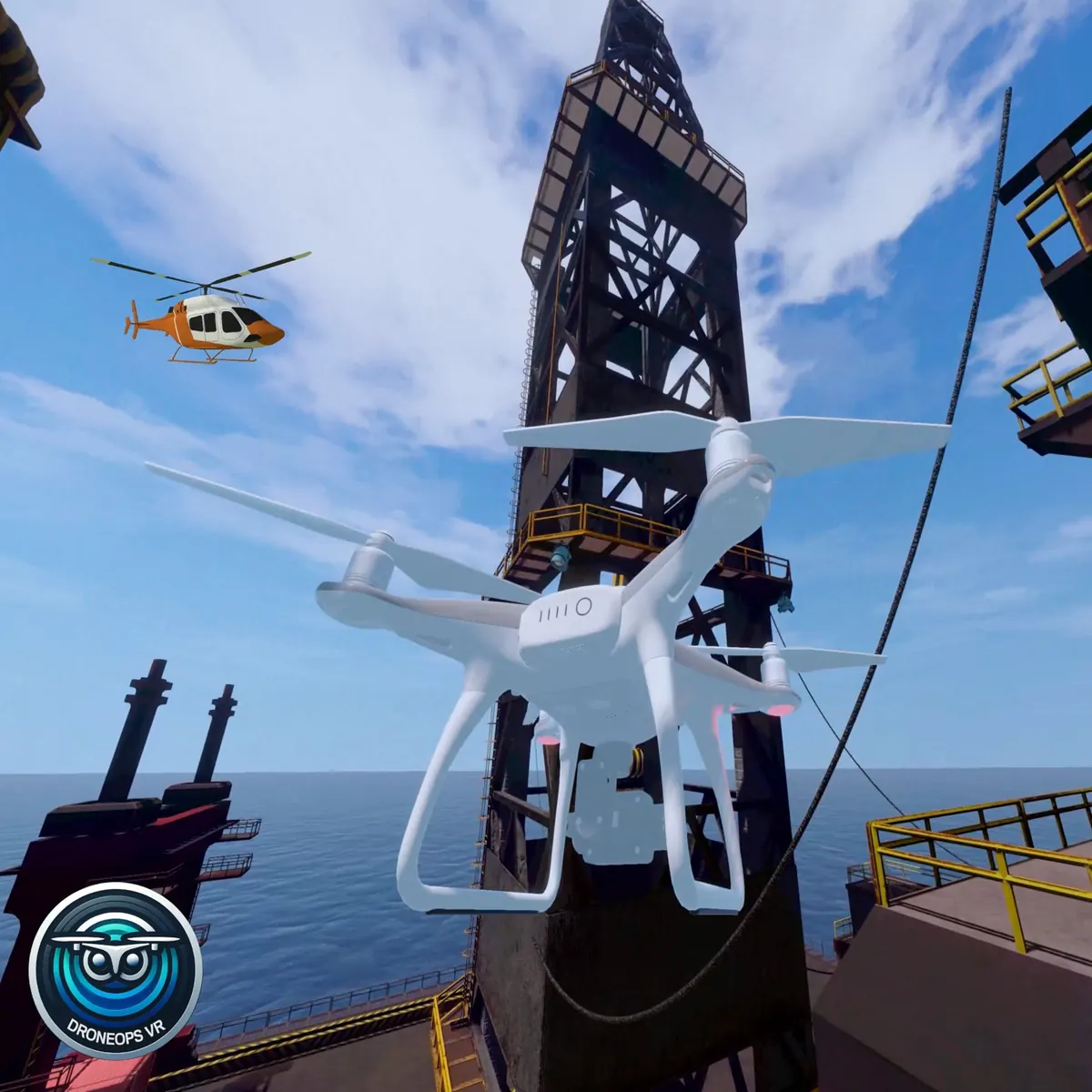
DroneOps VR uses immersive environments to let trainees inspect a site, identify risks, plan activity and review decisions. The training can be updated as regulations and operating practice evolve, making it more flexible than a fixed classroom exercise.
The concept gives learners a site to inspect, route options to compare, constraints to consider and decisions to discuss with an instructor.
Classroom and online drone training can lack practical scenario work, while many VR drone products focus narrowly on flight control.
Realistic simulated sites give learners a safe place to practise hazard assessment, route planning and operational judgement.
The concept was shaped around drone operator and trainer feedback, regulatory context and scenario-based learning requirements.
Training can include realistic hazards such as clutter, people, vehicles, weather and site constraints.
The focus is flight management and planning, not simply controlling a virtual drone.
Digital delivery supports repeatable practice, remote instruction and refreshers when real-world access is limited.
What trainees practise
Trust signals
How we worked
The project drew on feedback from drone operators and training companies to move beyond flight-control simulation. The focus became hazard assessment, flight management and the practical realities of training people for safe operations.
DroneOps VR shows how Nudge Reality designs training around decisions as well as actions. It gives learners a shared environment where hazards can be seen, choices can be tested and judgement can be developed before real-world operations.