The problem
Clinical simulation is valuable, but physical mannequins can be costly and limited while remote VR can miss tactile practice.
Healthcare simulation
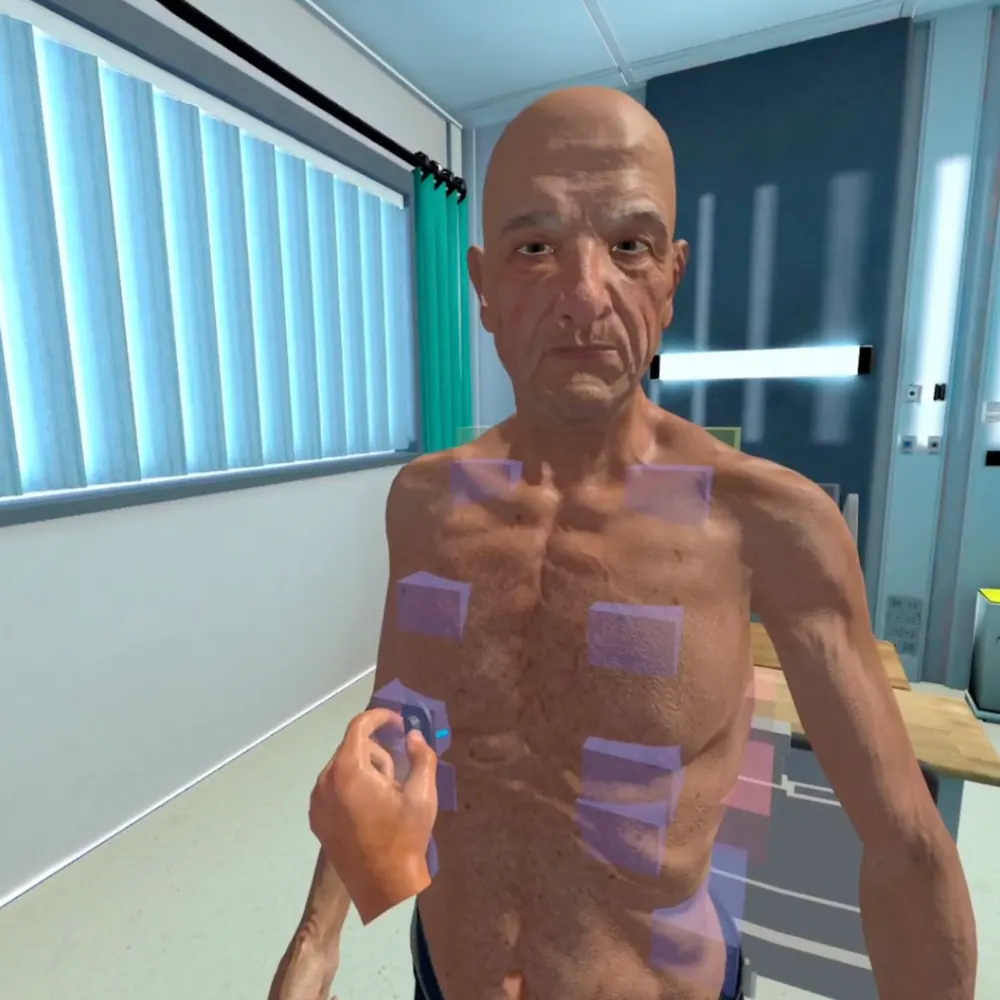
Mixed reality nursing simulation designed to bridge the gap between remote VR learning and hands-on clinical practice.
Problem and solution
Nursing training increasingly uses digital simulation, but many procedures still depend on touch, equipment handling and team communication. Fully virtual training can be accessible, but it often lacks the tactile cues that help learners build confidence with real procedures.
MetaNurse explores a mixed reality approach: trainees enter an immersive clinical scene while interacting naturally with real or physical objects. The aim is to keep the reach and repeatability of digital training while restoring more of the hands-on experience.
The concept builds from the same practical insight as TrainTrach: healthcare simulation becomes more useful when visual immersion, physical interaction, instructor observation and repeatable assessment are designed together.
Clinical simulation is valuable, but physical mannequins can be costly and limited while remote VR can miss tactile practice.
Mixed reality combines immersive scenes, audio, direct hand tracking and real-object interaction to support practical skills training.
The project built on Nudge Reality's healthcare simulation experience, including TrainTrach, and focused on procedure design, haptics and evaluation.
Real-world objects can provide practical feedback where controller-only VR falls short.
Multi-user simulation supports communication, observation and instructor-led learning.
The concept is designed around a portfolio of procedures rather than a single training scene.
What the simulation explores
Trust signals
How we worked
The project focused on the limitations of both sides of clinical simulation: physical mannequins can be expensive and hard to scale, while remote VR can miss the tactile detail that practical procedures require.
For practical healthcare skills, the interaction model matters: what learners hold, how they move, what feedback they receive and how instructors can assess what happened.