Industrial XR visualisation
Industrial XR visualisation for machinery and systems.
Nudge Reality builds interactive 3D, VR, AR and WebXR visualisations that help manufacturers and technical teams explain complex products, machinery and processes.
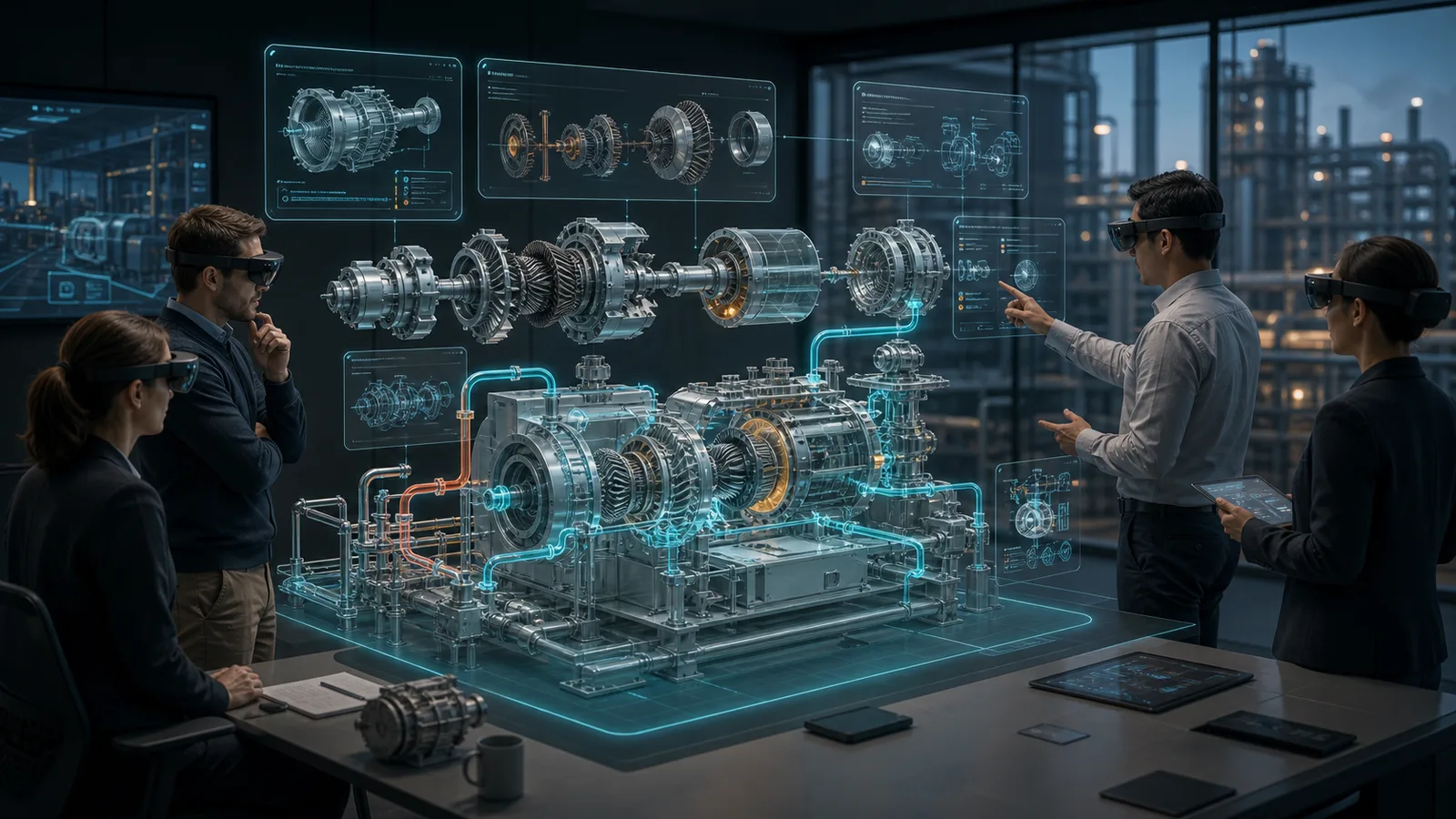
Industrial XR visualisation
Industrial products are often difficult to explain with photos, drawings or conventional video. The important detail may be inside the machine, distributed across a process, hidden during operation or dependent on context the buyer cannot easily see.
Nudge Reality creates industrial XR visualisation for technical sales, training, product communication and stakeholder engagement. The aim is to make complex machinery, facilities and workflows easier to inspect, understand and discuss.
Who this is for
- Manufacturers selling complex machinery or engineered products.
- Robotics, energy, construction, medtech and industrial technology companies.
- Technical sales teams who need clearer product demonstrations.
- Training teams explaining systems, maintenance, safety or operating procedures.
- Innovation and product teams preparing prototypes, funding material or stakeholder demos.
What industrial XR can visualise
Interactive XR can show machinery in motion, exploded assemblies, cutaway views, process flows, maintenance access, configuration options, installation steps, safety zones and operating conditions.
The experience can be built for VR headsets, AR devices, touchscreens, WebXR, browser-based viewers or sales-led demonstrations. In some cases the goal is a polished product demo. In others it is a practical internal tool for reviewing workflows, training users or aligning stakeholders.
Industrial XR applications
- Machinery visualisation and animated process demos.
- Product cutaways, exploded views and configuration tools.
- Factory, lab, plant or facility walkthroughs.
- Maintenance, safety and operational training simulations.
- Technical sales demos for trade shows, customer meetings and investor presentations.
- Web-based product viewers for easier access across distributed teams.
Development process
We start by identifying the technical information that is hardest to communicate. That might be the movement of a mechanism, the relationship between components, the sequence of an operation or the value of a product in a specific environment.
From there we define the visual model, interaction design, platform route and level of fidelity required. Some projects need CAD-informed accuracy. Others need a simplified model that makes the principle clear without overloading the user.
Deliverables can include
- Interactive machinery or product visualisation.
- VR, AR, WebXR or touchscreen demo builds.
- Exploded views, cutaway models and process animations.
- Technical sales or training scenarios.
- 3D assets prepared for reuse across presentations, events and web pages.
Accuracy and clarity
Industrial XR visualisation has to balance technical accuracy with communication. A detailed CAD model may be useful for engineering review, but too heavy or visually noisy for a real-time sales demo. A simplified model may explain the operating principle better, but it still needs to respect the product.
We work with subject specialists to decide what needs to be faithful, what can be abstracted and what should be animated or highlighted so the viewer understands the system without being overwhelmed by detail.
Frequently asked questions
Can you work from CAD files?
Yes, where suitable assets are available. CAD data often needs optimisation, simplification and material work before it becomes usable in real-time XR or web experiences.
Is this only for sales?
No. Industrial XR visualisation can support sales, training, maintenance, stakeholder review, planning, onboarding and product development.
Can you make machinery appear to work?
Yes. We can animate process flow, mechanisms, configuration changes, maintenance steps or operational scenarios, provided the required technical behaviour is defined with your subject specialists.
Should this be VR, AR or WebXR?
It depends on use. VR is strong for immersive walkthroughs and training. AR can be useful for scale and spatial context. WebXR and browser-based 3D are useful when access and sharing matter more than full immersion.
Related services include XR trade show experiences, XR product development and WebXR product configurators.