XR product development
XR product development for prototypes and products.
Nudge Reality helps teams move from XR proposition and interaction model to prototype, MVP and deployable product, with the surrounding tools, evidence and workflow considered early.
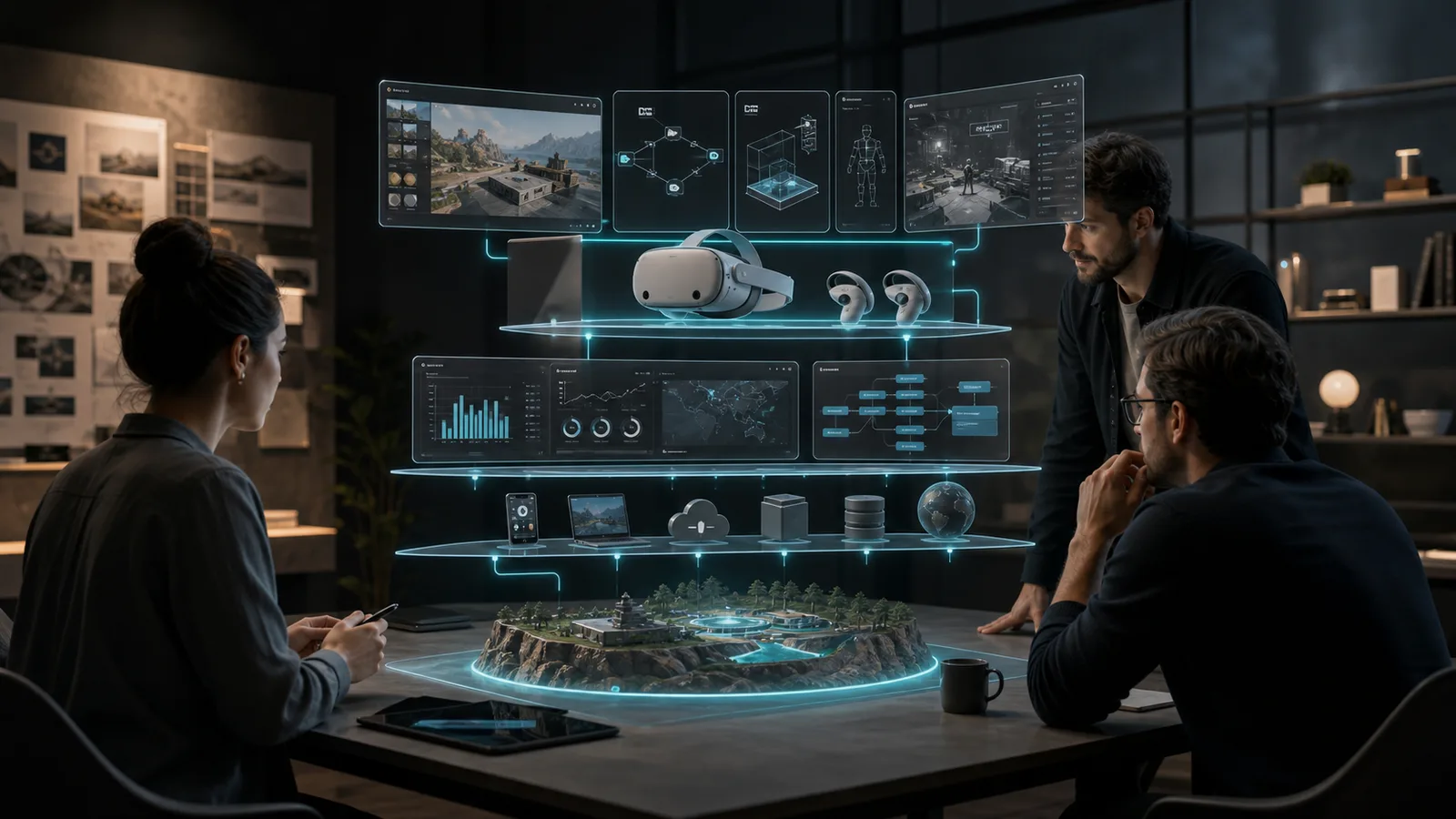
XR product development
An XR product is rarely just the immersive experience. There may be onboarding, content management, companion web tools, trainer workflows, analytics, hardware deployment, support, evidence, documentation and commercial positioning around it.
Nudge Reality helps teams move from proposition to prototype, MVP or deployable product. We are most useful where the work needs both software delivery and product judgement: what to build first, what to test, which platform route makes sense and how the experience fits the real workflow.
Who this is for
- Startups and product teams developing VR, AR, mixed reality or WebXR software.
- Medtech and digital health teams building healthcare XR products or prototypes.
- Training and education teams turning specialist knowledge into repeatable software products.
- Research and innovation teams moving from funded R&D into a more robust product pathway.
- Organisations with an existing XR concept that needs clearer scope, architecture and delivery planning.
Product discovery
The first stage is to define the product clearly enough to build. That includes the target user, setting, intended outcome, workflow, hardware route, content scope, evidence stage and reason XR is the right medium.
For some projects, discovery produces a lean prototype brief. For others, it produces a roadmap for MVP development, platform architecture, stakeholder testing and deployment. We define that wider system early so the immersive experience can be tested in the context where it will actually be used.
Development scope
- Product discovery, requirements definition and technical planning.
- Interaction design for VR, AR, mixed reality and WebXR experiences.
- Unity development, WebXR tooling and companion web interfaces.
- 3D asset production, scenario design and content structures.
- Prototype, MVP or funded R&D build development.
- Usability testing support, stakeholder review builds and handover planning.
Product systems around XR
An XR product may need more than one interface. A headset experience might require a web dashboard, authoring tool, scenario library, trainer view, onboarding flow, analytics export or content update process.
We can help decide which surrounding tools are necessary now, which should wait, and which would add complexity without enough value. We make those decisions before extra platform features distract from testing the core experience.
Product maturity and launch planning
For healthcare, rehabilitation and training products, we define the product stage early: concept demonstrator, research prototype, internal training tool or regulated healthcare product. Each route has different requirements for documentation, testing, wording and launch planning.
That distinction helps the sales copy, SEO page and stakeholder material make the offer clear while staying aligned with the product stage.
Relevant XR product work
CorteXR shows how a rehabilitation concept can become structured VR software around everyday stroke-recovery tasks. TrainTrach, StrokeID and MetaNurse show clinical training ideas becoming repeatable immersive simulations. StageCraftVR shows the same product thinking applied to education and creative practice.
Frequently asked questions
Can you help before we have a full specification?
Yes. Many XR products start with a problem, a grant brief, a training need or a stakeholder idea rather than a finished spec. We can help shape the product definition before committing to a larger build.
Do you build prototypes or full products?
Both. A prototype is often the right first step, but we can also develop MVPs, funded R&D builds and more complete software products where the scope is clear.
Can you support the web tools around the XR experience?
Yes. Depending on the project, that might include WebXR, dashboards, scenario viewers, authoring tools, onboarding flows or trainer-facing interfaces.
How does this differ from general XR development?
General XR development focuses on building the immersive software. XR product development also considers the surrounding product system: user journey, content workflow, deployment, evidence, support and future roadmap.
If the project is still exploratory, see XR prototype development. If it is specifically clinical, see healthcare XR development.