Healthcare XR development
Healthcare XR development for clinical products and training.
Nudge Reality designs and builds immersive clinical training, rehabilitation and digital-health software, with experience across regulated product development, usability evidence and certification planning.
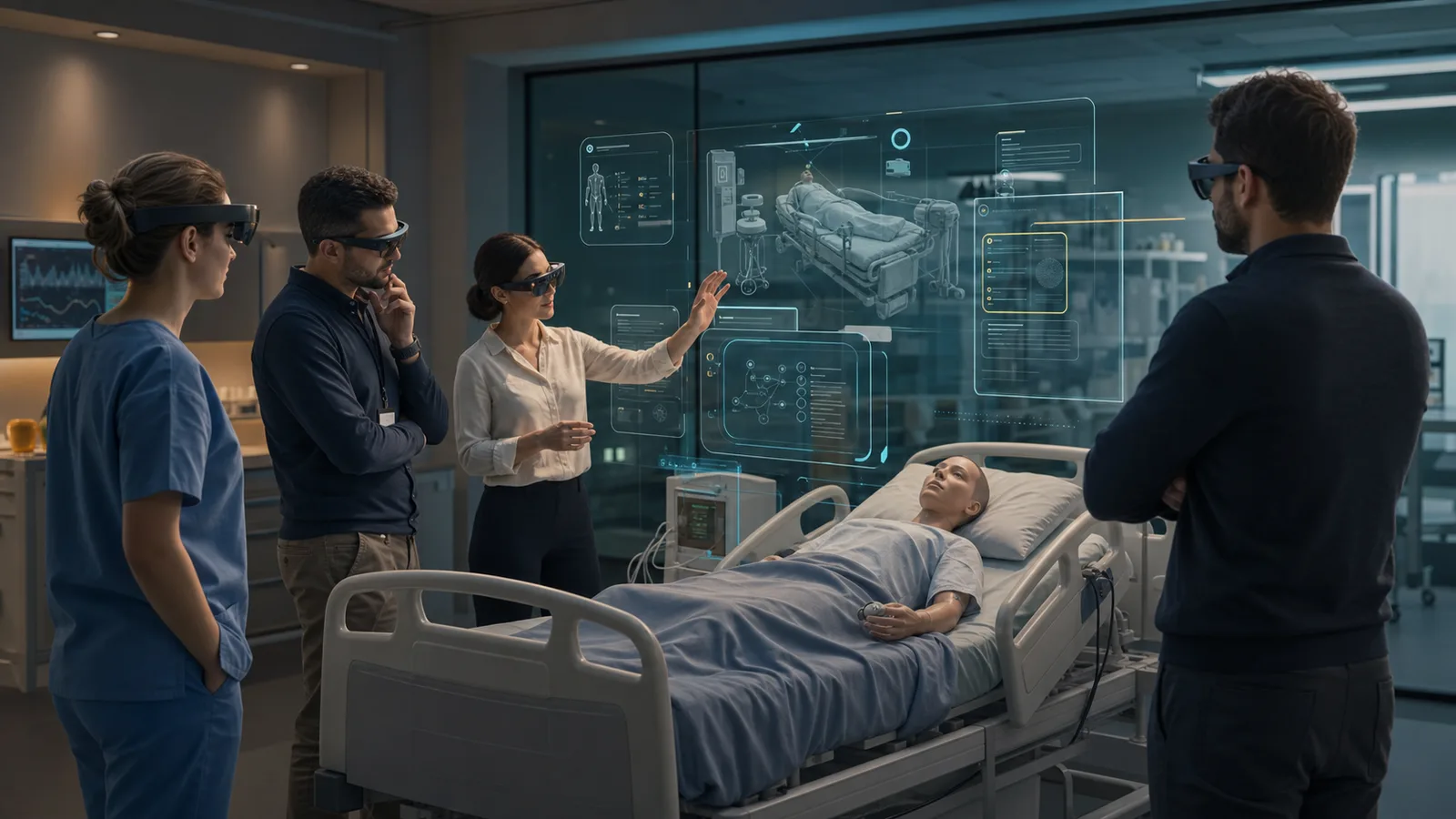
Healthcare XR development
Healthcare XR work sits between clinical practice, product design and software delivery. The brief may be a clinical training simulation, a rehabilitation product, a digital health R&D prototype or a mixed reality workflow for practical skills. In each case, the work needs to respect the setting, the user, the evidence requirements and the route the product may need to take.
Nudge Reality helps teams define and build immersive healthcare software with that context in view. We are useful when the project needs clear task design, clinical workflow understanding, stakeholder testing, documentation inputs and a route towards a usable product.
Who this is for
- Medtech and digital health teams developing XR-enabled healthcare products.
- NHS, university and research teams preparing prototypes for funding, feasibility or evaluation.
- Clinical educators who need repeatable simulation for assessment, procedure rehearsal or decision-making.
- Rehabilitation teams exploring VR tasks, cognitive practice or home and community pathways.
- Product teams who need software delivery to stay aligned with risk, evidence and certification planning.
Regulated product and certification support
We have developed products for regulated healthcare contexts before, so certification, documentation, risk management and usability evidence are considered early rather than added after the interface is already fixed. Intended use, clinical claims, data handling, user workflow, interaction design and technical architecture can all affect the route a product later has to take.
We can support teams as they think through product classification, claims language, technical documentation, usability evidence, risk controls and practical questions around UKCA, CE and other certification conversations where relevant. This may include shaping requirements, preparing prototype evidence, clarifying software behaviour, supporting usability work and keeping product descriptions aligned with the current evidence stage.
This is product-development support, not a replacement for formal legal, clinical safety or regulatory sign-off. Where a project needs specialist regulatory review, clinical safety assurance or approved-body input, we expect that work to sit alongside the software process. The value we bring is making sure the build is informed by those considerations from the start.
Healthcare XR services
- Clinical training simulations for assessment, procedure rehearsal, communication and decision-making.
- VR rehabilitation concepts that turn therapeutic or cognitive tasks into structured, repeatable practice.
- Mixed reality and hand-tracking prototypes for practical skills, equipment workflows and clinical environments.
- Digital health R&D prototypes for grants, feasibility work, stakeholder testing and evidence planning.
- Product-development support where healthcare context, usability, risk, documentation and certification planning need to move together.
How we approach the work
The first step is to define the clinical or educational task. Who is using the software, where it will be used, what they need to practise or achieve, and what evidence would make the next decision easier?
From there we can shape a focused prototype, simulation or product build. That usually means deciding the right hardware route, mapping the user journey, defining the interaction model, producing the required 3D or interface assets, building the software and preparing it for stakeholder review or user testing.
For regulated or evidence-sensitive projects, we define the product stage early: concept demonstrator, research prototype, training tool or product intended for clinical use. That stage affects requirements, documentation, test planning and stakeholder material.
Relevant healthcare work
CorteXR focuses on VR rehabilitation around everyday stroke-recovery tasks. StrokeID explores VR training for stroke and TIA assessment. TrainTrach and MetaNurse explore mixed reality approaches to clinical skills training. HypnoThrive and THRIVE-FND show digital health R&D shaped with NHS clinical partners.
These projects sit at different stages of maturity and intended use, from training simulations and R&D prototypes to product development. The development plan should reflect that.
Frequently asked questions
Can you help with medical device certification?
We can help with the product and software work around certification planning: intended use, claims language, requirements, usability evidence, risk controls and technical documentation inputs. Formal regulatory advice, clinical safety sign-off and certification decisions should come from the appropriate qualified specialists.
Do you only work on regulated medical products?
No. We also build clinical training simulations, research prototypes, digital health demonstrators and rehabilitation concepts. The scope should match the product stage, evidence requirements and users.
Can you work with clinical and academic partners?
Yes. Much of this work depends on collaboration with clinicians, therapists, researchers, educators and patient or learner representatives. We can work with an existing team or help structure the development process around stakeholder input.
Can you build something for a grant, pilot or feasibility study?
Yes. A focused prototype can be valuable for funding, stakeholder engagement, user testing and feasibility work, provided the scope is tied to the evidence or decision the team needs next.
For a wider overview, see VR rehabilitation software and immersive training simulation.