Stroke and cognitive rehabilitation
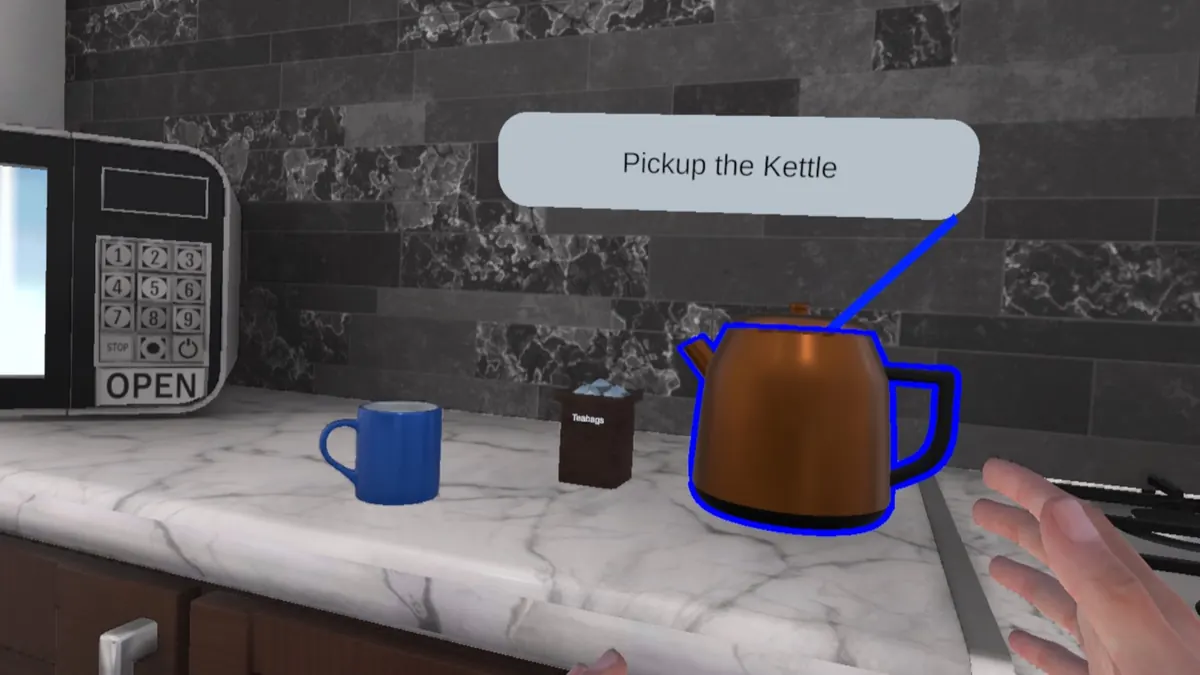
CorteXR turns everyday stroke-recovery tasks into structured VR practice, developed with clinical, therapist and stroke-survivor input.
CorteXR project pageVR rehabilitation
Nudge Reality builds VR rehabilitation and healthcare training software around real users, clinical context and evidence-aware product development.
Healthcare context
Healthcare teams usually come to XR because a task is hard to practise, hard to repeat, difficult to observe or too important to leave to passive learning.
We turn that problem into software by working with the people around the pathway: clinicians, therapists, patients, researchers, trainers and governance stakeholders.
The result may be a rehabilitation prototype, clinical training simulation, digital health R&D build or product pathway. Those are different kinds of work, and they need to be described, tested and governed accordingly.
VR rehabilitation software
CorteXR turns everyday stroke-recovery tasks into structured VR practice, developed with clinical, therapist and stroke-survivor input.
CorteXR project pageImmersive scenarios for rehearsal, decision-making and procedural understanding, including stroke assessment, tracheostomy and nursing simulation work.
Immersive trainingEarly-stage digital health projects where the experience, pathway, evidence and claims need to be explored together.
HypnoThrive projectHealthcare XR offers
XR prototypes and products for rehabilitation, clinical training, digital health R&D and specialist simulation.
Healthcare XR developmentProduct thinking and software development for teams moving from concept, evidence and stakeholder need toward a usable build.
XR product developmentFocused prototypes for clinical stakeholders, research funding, usability testing and early pathway decisions.
XR prototype developmentHealthcare development
Healthcare portfolio
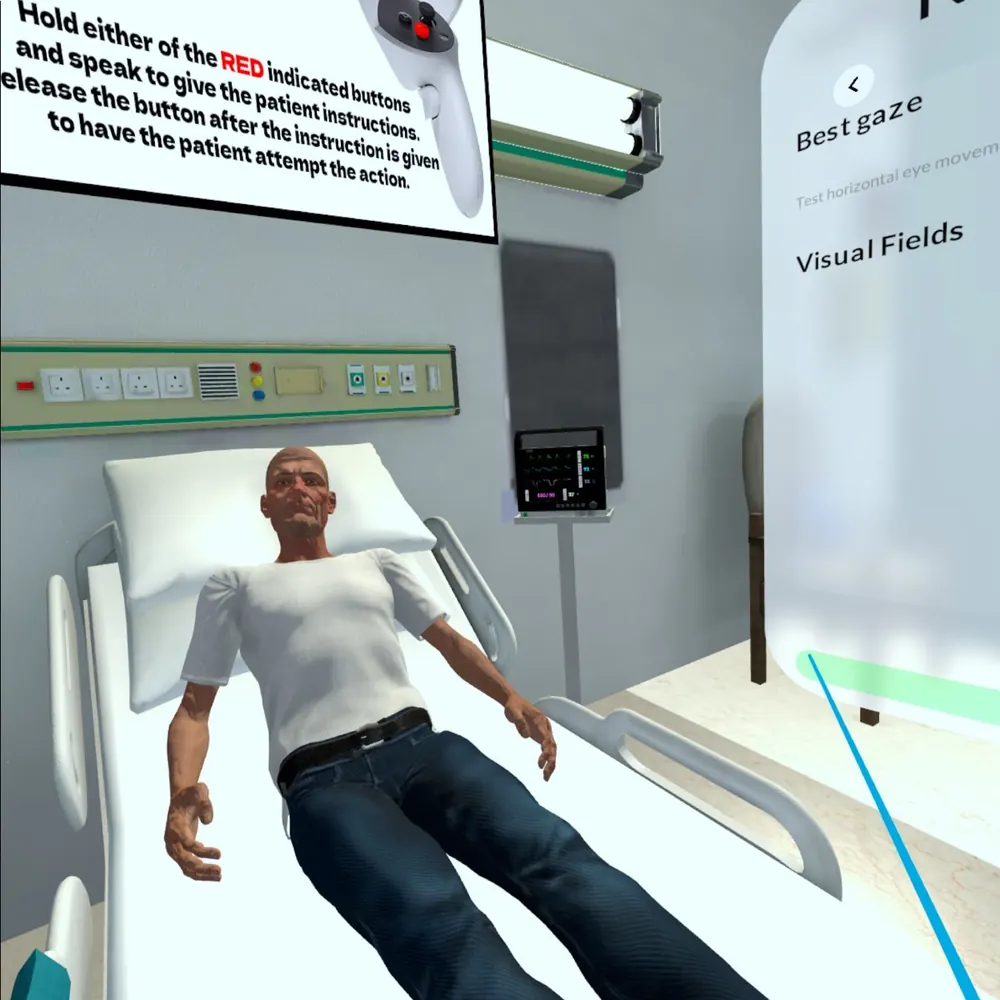
VR training for stroke and TIA assessment, with patient avatars, acute-care settings and scenario-based decision practice.
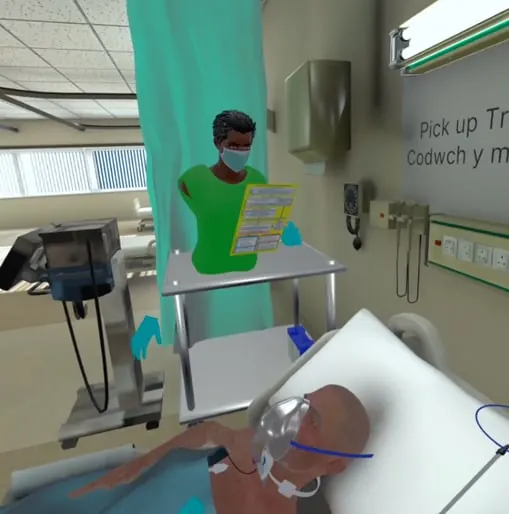
Mixed reality tracheostomy training using hand tracking, tactile props and a realistic bedside simulation.
Careful by design
Tell us the users, the setting, the intended use and the evidence stage. We will help shape the software around the real work it needs to do.