XR prototype development
XR prototype development for product validation.
Nudge Reality builds focused XR prototypes that reduce uncertainty around user value, interaction design, technical route and the next product decision.
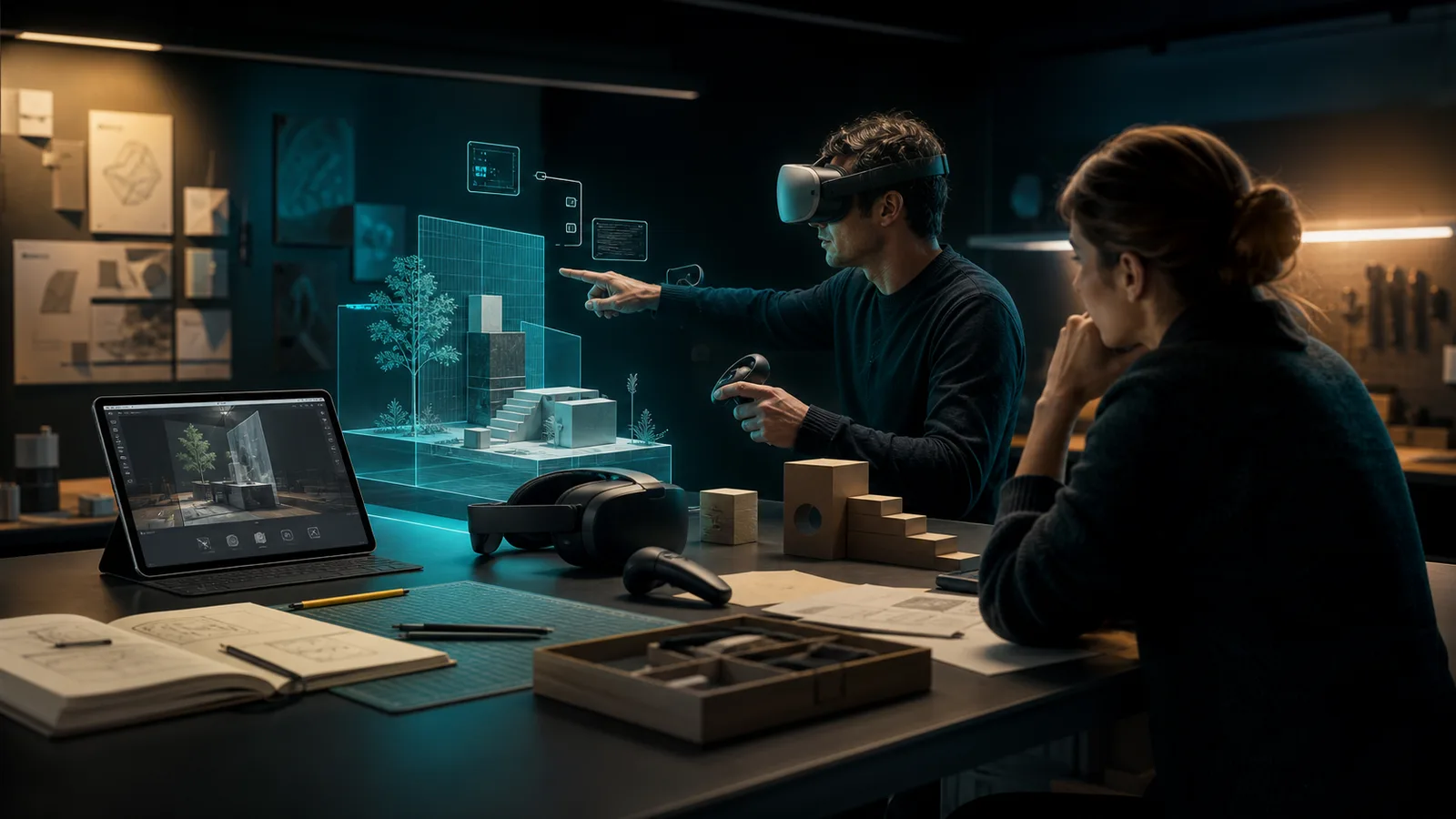
XR prototyping
A useful XR prototype answers a defined product question. It might test user value, interaction comfort, spatial layout, scenario design, hardware suitability, technical feasibility, stakeholder appetite, procurement risk or the shape of a future product brief.
The goal is to build enough of the experience for people to try it, assess it and make better decisions about the next stage. That usually means choosing a narrow question and building a prototype that is complete enough to expose the answer.
Who this is for
- Teams with an XR concept that needs validation before a larger build.
- Funded R&D projects that need a working demonstrator or feasibility prototype.
- Training, healthcare or education teams testing whether immersive practice is the right format.
- Product teams choosing between VR, AR, mixed reality, WebXR or a conventional web interface.
- Organisations that need something concrete for stakeholder review, procurement, grant evidence or early user testing.
Prototype formats
- VR headset prototypes for task rehearsal, simulation, interaction design and spatial testing.
- WebXR or browser-based prototypes when access, sharing and quick stakeholder feedback matter.
- AR and mixed reality prototypes for spatial interfaces, overlays and hands-on workflows.
- Scenario prototypes for training, education, healthcare or operational simulation.
- Product demonstrators for grant applications, internal buy-in, investor conversations or early customer discovery.
Prototype questions
The best prototype scope depends on the decision it needs to support. Common questions include:
- Does the interaction model make sense to the intended user?
- Does the scenario create the right kind of practice or discussion?
- Is the required fidelity visual, behavioural, procedural or environmental?
- Which hardware route is practical for the setting and budget?
- What needs to be tested before an MVP or product build is justified?
Prototype outcomes
A useful prototype should clarify what the user is being asked to do, which fidelity actually matters, where the technical risk sits and what evidence is needed before the next investment.
Typical outputs can include a playable prototype, stakeholder review build, short technical report, revised product brief, content scope, development estimate, hardware recommendation and next-stage roadmap.
We can also turn prototype findings into a sharper specification for an MVP, funded R&D phase or full product build.
When to prototype first
Prototype first when the idea is promising but still ambiguous: the problem is real, but the product shape is not yet settled. Early prototypes reduce expensive guesswork and give stakeholders something concrete enough to challenge.
This is especially useful for healthcare, training and education projects, where the value of the experience depends on task design, context and user behaviour rather than the immersive format alone.
Relevant prototype work
CorteXR grew through funded R&D, clinical input and iterative product development. TrainTrach used rapid prototypes and stakeholder review to shape a mixed reality clinical training kit. DroneOps VR was shaped around operator and trainer feedback. StageCraftVR uses XR prototyping to make creative decisions visible and repeatable.
Frequently asked questions
How big should an XR prototype be?
Only as big as the decision it needs to support. Some prototypes are a single scenario or interaction loop. Others need a wider slice of the product to test workflow, stakeholder confidence or technical feasibility.
Can a prototype be used for funding or stakeholder buy-in?
Yes. A focused prototype can help funders, partners and internal teams understand the proposed experience far better than a document or deck alone.
Do you prototype in WebXR as well as VR?
Yes. WebXR can be useful when rapid access, sharing and stakeholder testing matter. Native VR or mixed reality may be better when interaction fidelity, headset performance or device-specific features are central to the question.
What happens after the prototype?
The prototype should produce clearer decisions: refine the concept, build an MVP, prepare a funding application, run user testing, or stop before more money is spent in the wrong direction.
For broader delivery, see XR product development. For browser-first work, see WebXR development.